

Teaching children about money management does not have to wait until they grow up. In fact, parents can start introducing the concept of saving from an early age through simple activities at home.
Children may not fully understand the value of money yet, but they can learn through everyday experiences. For example, they can put money into a savings jar, choose what they want to buy, and understand the difference between needs and wants.
With parents' guidance, these small practices can help children develop better money management habits as they grow.
Introduce the Concept of Saving
Start by explaining the meaning of saving in simple words that your child can easily understand. Tell them that saving means setting aside some money to use in the future.
For example, if your child wants to buy a storybook or a toy, encourage them to save a little money at a time until they have enough to buy it.
Use the Three Jar Method
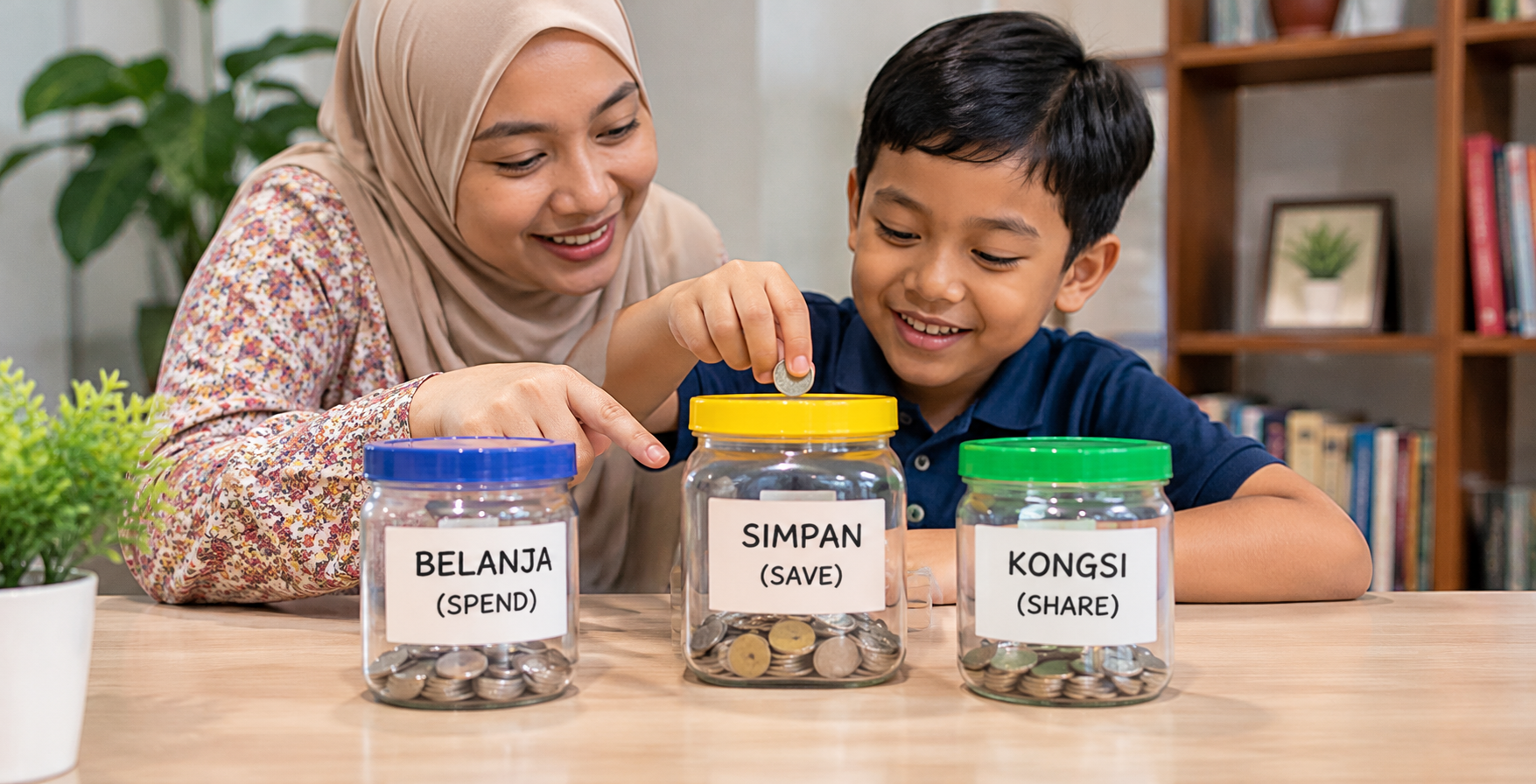
One fun way to introduce money management is through the Three Jar Method. Prepare three separate containers and label each one according to its purpose.

SAVE
Build savings for future goals.
SPEND
Make thoughtful spending choices.
Whenever your child receives pocket money or a gift, help them divide it into these three categories. This activity teaches children that money has different purposes.
Set Small and Achievable Savings Goals
Whenever your child receives pocket money or a gift, help them divide it into these three categories. This activity teaches children that money has different purposes.
For example, if your child wants to buy a toy worth RM30, encourage them to save RM5 every week. This helps them understand how small savings can add up to a larger amount over time.
Make Saving a Fun Family Activity
Financial learning does not have to involve explanations alone. Parents can make saving more enjoyable through fun games and activities at home.
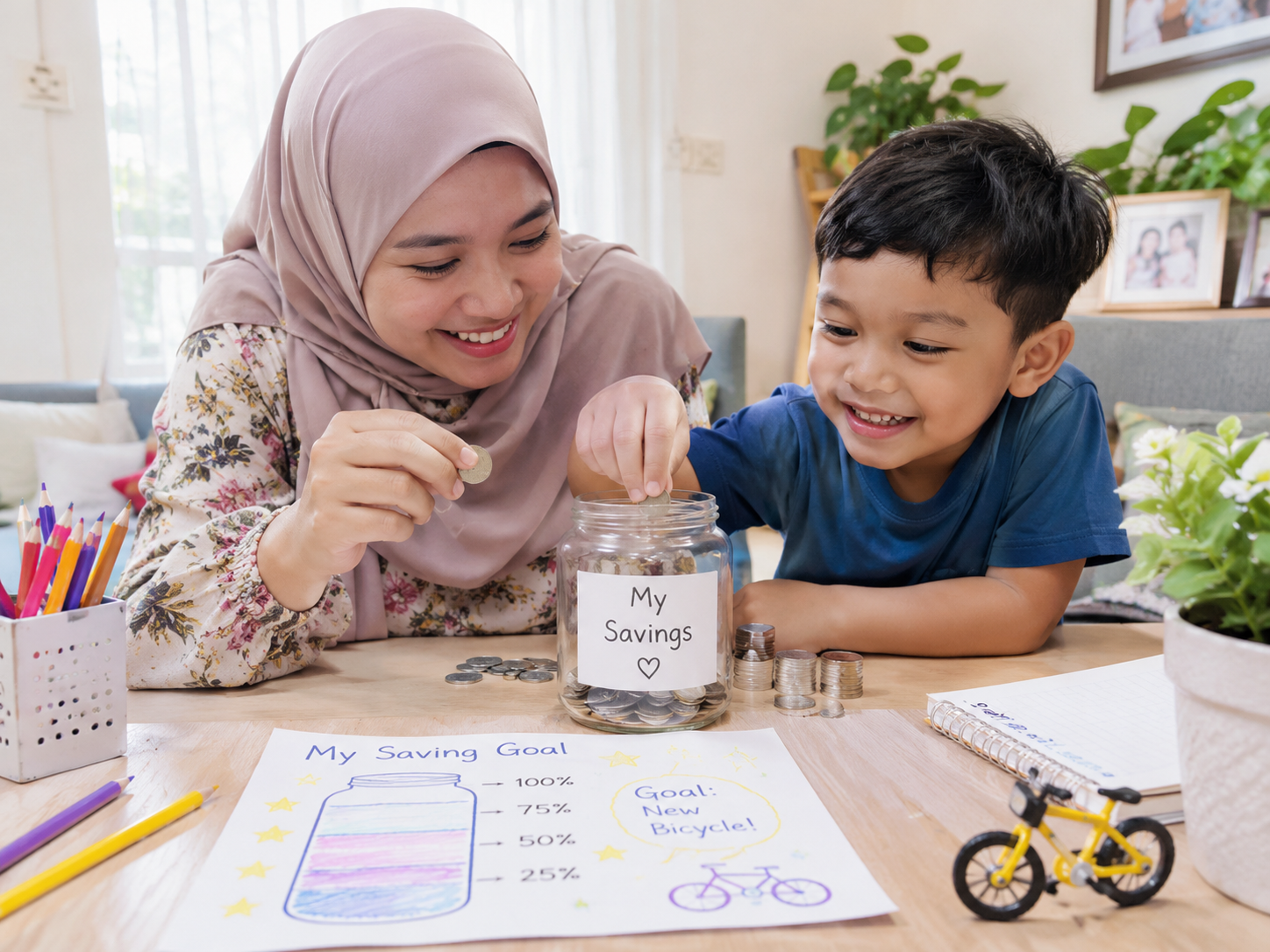
- Count coins together.
- Decorate their own savings jar.
- Try a weekly savings challenge.
- Record their savings in a chart.
- Play shop using toy money.
Be a Good Financial Role Model
Children often learn by observing their parents. They watch how their parents make decisions when shopping, plan their expenses and manage money.
For example, when shopping for groceries, parents can explain why it is important to compare prices before making a choice. Simple explanations like this help children understand the importance of spending wisely.
Celebrate Their Small Achievements
Every small achievement deserves recognition. When your child reaches a savings goal, praise and encourage them to keep trying.
Rewards do not always have to come in the form of gifts. Positive words and encouragement from parents can also help build a child's confidence.